Meta Description: A working PR team asked focus group how to fix an executive who won’t accept coaching. The answers were blunt, practical, and worth stealing.
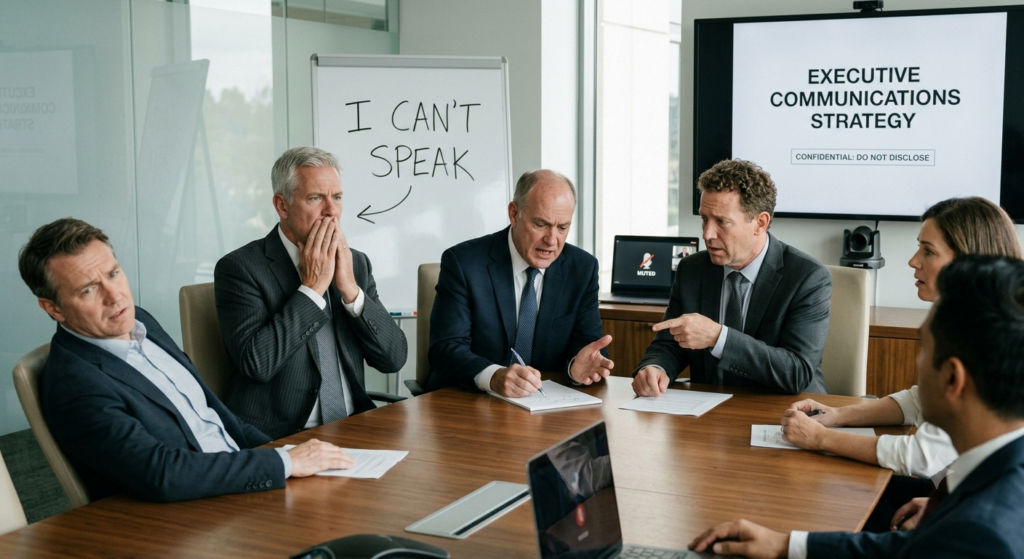
Every in-house communicator has met this executive. They’re senior, they’re smart, and they are absolutely certain they’re good on camera. You sit through the interview watching key messages evaporate into three-minute answers, and afterward they turn to you, satisfied. As one PR professional put it in a recent focus group: if the interview wasn’t career-ending, they assume it went well.
That post — from an in-house practitioner on a very small team — drew a wave of responses from agency staff, in-house leads, and working media trainers. What came back was less “here’s how to fix your exec” and more a set of hard-won tactics for working around a specific psychological problem: you cannot coach someone who doesn’t believe there’s anything to coach.
Here’s what the discussion covered, where it landed, and how to turn it into something you can actually run this quarter.
The Problem, As Posted
The original poster laid out a situation most communicators will recognize:
- Multiple formal media trainings, with different trainers, had already been done.
- Coaching happened before and after interviews, with honest feedback shared each time.
- Some of it stuck. But one very senior executive consistently rambled, missed the soundbite, and left key messages unlanded — then walked away pleased.
- Because the company is small, high-profile media opportunities are rare. Every one carries outsized pressure because there isn’t an endless supply of second chances.
- And afterward, colleagues internally would offer their opinions on the performance, frequently by complaining directly to the PR lead.
The questions were honest ones: does anything actually work on an executive who doesn’t think they need coaching? Do some people simply have a ceiling as spokespeople? Or does this improve later in a career?
The post ended with the line that clearly resonated most — some nights spent wondering whether the PR person was the problem, or whether there was more they could be doing.
What the Thread Agreed On
Across a couple dozen replies from very different vantage points, five points came up again and again.
1. Feedback from an outsider lands differently than feedback from you
This was the top-voted response and the most repeated theme. Executives will often accept from a paid specialist exactly what they dismiss from an internal generalist — and, critically, the outsider can be blunt in a way you structurally cannot when the person is your boss.
One commenter who generally dislikes bringing in third parties made an exception here, noting how hard it is to be fully objective with executives when you’re also aware of your own job security. Push too hard and you risk them feeling bad, over-analyzing, or resenting you for the feedback. A consultant carries none of that baggage.
A related tactic: make it universal policy rather than a personal intervention. Frame it as anyone who speaks to media goes through training, regardless of experience. That removes the implication that this particular executive has been singled out.
2. Choose the trainer for bluntness, not politeness
The original poster’s follow-up was telling: they had used third parties, and the trainers had been candid — just not candid enough.
The thread’s answer was to select deliberately for someone who won’t soften it. Several people recommended former broadcast journalists who run genuinely harsh mock interviews, then take the journalist hat off afterward and deliver the critique constructively. One commenter suggested the trainer should also carry enough personal credibility to impress the executive — status opens ears that skill alone won’t.
There was also a sharp observation from a working trainer in the thread: the hardest participants are the ones who don’t think they need to be there and show up ostensibly to “support” their junior colleagues.
3. Video is the only feedback that can’t be argued with
If one tactic dominated the practical advice, it was this. Your word is contestable. The camera isn’t.
The most detailed version came from a commenter who stopped telling their executive they’d rambled and started showing them. They pulled a couple of past interviews, clipped out the worst two minutes of meandering, and played it directly against a tight version of the same answer. The executive finally saw the gap between what they thought they’d said and what actually landed. It was uncomfortable for about five minutes — and then it worked.
Two things make this approach effective:
- It compresses to a single data point. This clip versus that clip bypasses ego far faster than a formal training day, particularly when someone is convinced they nailed it.
- It reframes the conversation. The message shifts from you’re bad at this to here’s the opportunity we lost — a far easier thing to accept.
Variations from other commenters: record mock interviews and play them back against strong public examples from other organizations (not colleagues — that turns it personal), and get a written critique from the trainer with concrete action items attached.
4. Narrow, specific feedback beats a list of improvements
An agency-side commenter made the point that broad feedback rarely changes behavior. What works is pinpointing the exact moment: where the key message got lost, where an answer overran, where a stronger quote was available and missed.
They also recommended keeping each debrief to one or two specific behaviors. Hand someone a list of eight things to fix and they’ll fix none of them.
5. “Not a natural speaker” and “not coachable” are different problems
This was the sharpest distinction in the entire thread, and it’s the one worth carrying into your next planning conversation.
Plenty of people who aren’t naturally gifted improve substantially with repetition and very specific preparation. That’s a solvable problem.
The unsolvable version looks different: someone who won’t practice, doesn’t absorb feedback, and defines success as nothing disastrous having happened. In that case, PR can reduce risk — but it probably can’t fix the performance.
Knowing which one you’re dealing with tells you whether to keep investing in coaching or start managing around it.
Where the Thread Disagreed
Two genuine fault lines showed up.
How far to escalate. Several commenters advocated looping in the executive’s own boss — the CEO or the board — so the person above them is briefed on the stakes and visibly backs the need for improvement. Others focused entirely on tactics within the PR function. The escalation route is more effective and considerably more politically dangerous; only you know whether your organization would tolerate it.
Whether to keep trying at all. The most forceful reply came from someone who had a paid spokesperson refuse media training and then handle a knife on morning television — they fired her before she left the studio, and their advice was simply to pick a different spokesperson. At the other end, one commenter offered a one-line dismissal: improving this is just part of the PR job. Most people landed in between.
A Practical Playbook
Pulling the thread’s advice into something sequenced:
1. Diagnose before you train again. Is this person uncoachable, or under-prepared? If they’ll practice and absorb specific notes, keep investing. If they won’t, skip to step 6.
2. Build the evidence reel. Before the next training, clip 90 seconds of their weakest recent answer alongside a tight version of the same point — theirs, or a strong public example from another company. This is your highest-leverage single asset.
3. Bring in an outsider selected for bluntness. Ask candidates directly how they handle a senior executive who thinks they’re already good. If the answer is diplomatic, keep looking. Former broadcast journalists came up repeatedly for a reason.
4. Make training a blanket policy. Everyone who speaks to media goes through it, regardless of seniority or experience. Nobody’s being singled out.
5. Change the debrief format. One or two specific behaviors, tied to an exact timestamp, with a written critique and action items from the trainer. Not a list. Not general impressions.
6. Build the cheat sheet. One commenter described the turning point with a resistant executive: after the uncomfortable playback, the exec came back a few days later and asked for a short cheat sheet of talking points and likely answers ahead of every interview. Interviews improved sharply, and — the more valuable outcome — she started genuinely relying on the PR function. Have that document ready before they ask for it.
7. Set a pass/fail rubric if you’re persisting with someone difficult. Record them practicing on camera, have peers score it against defined criteria, and hold the line: no pass, no interview. This only works with air cover from above, but it converts a subjective argument into an objective one.
8. Allocate opportunities strategically. One of the most quietly useful ideas in the thread: give the weaker spokesperson enough routine opportunities that they don’t feel sidelined — which makes them far less likely to fight you over the high-stakes ones that go to someone stronger.
9. Narrow the brief. Where an executive can’t be improved much, restrict the topics they speak on, prepare heavily around their genuine strengths, and route everything else elsewhere.
And the Part About Whether You’re the Problem
The original post ended with a PR professional lying awake wondering if they’d failed. That deserves a direct answer, because the thread gave one.
You can control preparation, message discipline, the quality of the training, the specificity of the feedback, and which opportunities go to whom. You cannot control whether a senior executive decides they have something to learn. When someone won’t practice and measures success by the absence of catastrophe, the ceiling isn’t a reflection of your coaching.
What the thread suggests is a shift in where you spend the effort: less energy trying to convert a resistant executive into a great speaker, more on evidence they can’t dismiss, preparation that does the heavy lifting for them, and a spokesperson roster deep enough that no single person is a bottleneck.
The unglamorous version of this job is often risk reduction rather than transformation. That’s still the job being done well.
Leave a Reply