
Everything is urgent. Your to-do list never ends. You’re juggling clients with wildly different needs, stepping in to cover skill gaps, and still ending the day feeling like you’re not good enough. If that sounds familiar, you’re not alone. PR burnout is one of the most talked-about problems in the communications industry, and more professionals than ever are asking the same question: should I stay, switch, or walk away?
This guide draws on honest stories and advice shared by PR professionals in internet forums: people who quit, people who stayed, and people who found a better fit. It covers the warning signs, the real differences in agency vs in-house PR, and how to decide whether to quit your job without another one lined up.
Why PR Burnout Hits So Hard
Many PR professionals say the exhausting part isn’t the workload itself. It’s that every task gets treated as an emergency. You spend the day jumping between fires, handling work that arguably shouldn’t sit with you, and then wonder why your real priorities never got done.
Agency life adds another layer. You’re paid to give expert counsel, but clients don’t always take it, and your job depends on keeping them happy anyway. Forum users also described workplace cultures that felt performative, cliquey, or hostile to anyone who tried to keep a life outside work. As one industry saying goes, it’s PR, not ER. Yet in many agencies, ER mode is the default.
Signs You’re Experiencing PR Burnout
Burnout rarely arrives all at once. The professionals who shared their experiences described a gradual slide that included several of these signs:
- Feeling checked out on client calls because the work seems pointless.
- Waking up with anxiety or a knot in your stomach before the workday starts.
- Physical symptoms like exhaustion, poor sleep, skipped meals, or constant tension.
- Your work quality slipping, even though you’re working longer hours.
- Leaning on alcohol or other habits to cope with stress.
- Strain on your relationships because work anxiety follows you home.
One important distinction came up in these discussions: a bad environment can convince you that you’re bad at your job. Sometimes it’s the workplace that’s exhausting you, not the profession itself.
Agency vs In-House PR: Is the Grass Really Greener?
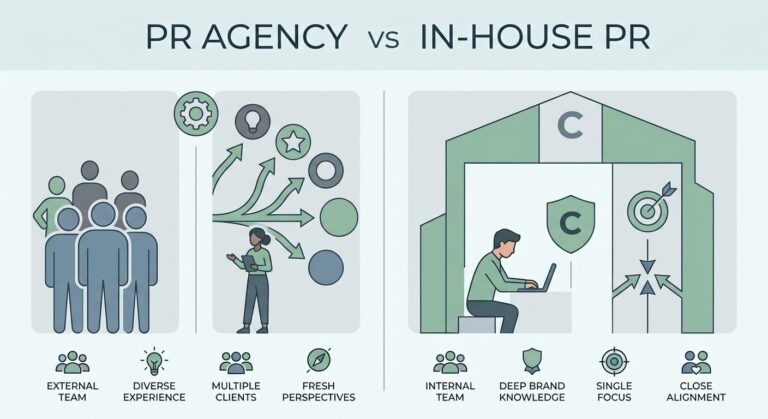
For newcomers, here’s the difference. At an agency, you handle PR for multiple businesses that are clients of the firm. In-house, you work on the internal communications team of a single company or organization and focus only on that brand.
Many professionals who made the move in-house described it as a major improvement. One person who left agency life for media relations at a nonprofit said the pace was still fast, but nowhere near agency levels, and the work felt more meaningful. Another said they were happier in-house than they’d ever been in their career.
But the move isn’t always simple. Several people noted that in-house roles are competitive and often filled through personal connections, so networking matters. Others said it took many months, and several final-round rejections, before they landed the right role. Interestingly, one senior professional who went the opposite direction, from in-house to agency, found agency culture a much worse fit.
There’s also a strong case for staying agency-side with the right team. Long-time agency professionals said good teams do exist, especially at smaller boutique firms, and that once you find one, it’s worth holding onto while you figure out your next step.
Should You Quit Your Job Without Another Lined Up?
This is where opinions split most sharply.
The case for quitting. Many who walked away without a plan called it the best decision they ever made. One person spent nine stressful months unemployed but ended up happily in-house. Another said quitting was terrible financially but worth it for their mental health, giving them time to rest, pick up hobbies, and “become a human again” while interviewing. Others pointed out that staying in a job you hate can leak into your interviews, making it harder to land something better.
The case for waiting. Others urged caution. The job market is tough, and experienced professionals are competing for the same roles. One veteran who had rage quit years earlier said it transformed their career, but only because they wanted independence and were ready for the pressure of paying the bills on their own. For someone whose main problem is stress and self-doubt, they warned, quitting abruptly could add stress rather than remove it.
The honest answer is that it depends on your finances, your health, and what you’d do next. The common thread among people with no regrets was that they had at least some plan, even if it wasn’t a new job.
A Checklist Before You Quit
If you’re leaning toward leaving, forum veterans offered practical advice:
- Build your portfolio first. Gather samples of your own work, results, and positive client feedback, while respecting any confidentiality agreements.
- Get your finances in order. Know how many months you can cover, even if it’s far less than the savings target everyone recommends.
- Protect your relationships. The PR world is big and small at the same time. Keep your frustration private during work hours and skip the dramatic exit.
- Start networking now. Especially if you’re targeting in-house roles, connections often matter as much as experience.
- Check your benefits. Understand what you’d lose, and whether you might qualify for unemployment support or medical leave instead.
Alternatives to Quitting Right Now
Walking away isn’t the only option. Professionals shared several middle paths.
Lower the stakes. One popular piece of advice was to stop treating every client “emergency” as life or death. Ask whether the issue will matter in a year, or even a week. Work at a sustainable pace and use the breathing room to job hunt.
Take medical or protected leave. Some professionals used medical leave to recover from burnout. In the US, the Family and Medical Leave Act (FMLA) may protect your job during qualifying leave. Talk to your doctor and HR about what’s available.
Switch agencies. One professional left a toxic agency within three months and joined another where the leadership was reasonable and not everything was urgent. The difference, they said, was night and day.
Go independent. A former agency creative director launched a small consultancy after a decade of agency frustration. Freelancing brings its own stress, but it lets you choose your clients.
Where PR Skills Transfer
If you decide to leave the field altogether, your skills travel well. Forum users mentioned peers who moved into events, partnerships and sponsorships, change management, and even entirely different careers like hospitality, fitness, and engineering. Writing, crisis management, stakeholder relations, and working under pressure are valuable almost everywhere.
Several people also noted that PR doesn’t usually come with “golden handcuffs.” Salaries are moderate in most cases, so matching your pay in another field can be easier than you’d expect. And if you want to return later, the door is often still open.
Is PR a Dying Industry?
Some frustrated professionals feel the industry offers too little reward for how hard it is. A veteran who has worked in PR since the 1990s offered a different view: people have been calling PR a dying field for decades. It’s going through another reinvention, and depending on where you are in your career, that can be painful. But the difficulty is exactly what makes PR a strong foundation for whatever comes next.
When Burnout Becomes a Health Issue
Some of the stories shared online were serious. People described crying on their commute, being unable to eat, and feeling like their body was breaking down. No job is worth your health. If stress is affecting your body, your relationships, or your will to keep going, please talk to a doctor or mental health professional. If you’re having thoughts of not wanting to live, reach out to a crisis line right away. In the US, you can call or text 988, and in other countries your local emergency number or a crisis helpline can connect you with support.
Frequently Asked Questions
What causes PR burnout?
PR burnout usually comes from constant urgency, heavy client workloads, unclear boundaries, and workplace cultures that reward being always available. The feeling of never finishing your list, combined with clients who don’t take your advice, wears people down over time.
Is in-house PR less stressful than agency PR?
Many professionals find in-house PR less intense because you focus on one organization instead of juggling multiple clients. It can still be fast-paced, and in-house roles are often competitive, so expect a longer job search.
Should I quit my PR job without another job lined up?
It depends on your savings, your health, and your next step. Some professionals say quitting was the best decision they made, while others warn that a tough job market can add stress. If you do quit, have a financial cushion, an updated portfolio, and a plan.
What jobs can PR professionals switch to?
Common moves include in-house communications, internal comms, events, partnerships and sponsorships, change management, content marketing, and freelance consulting. PR skills like writing and stakeholder management transfer to many fields.
Conclusion
PR burnout is real, common, and not a sign that you’re bad at your job. Whether you move in-house, find a healthier agency, go independent, or leave the industry, the professionals who came out happier all had one thing in common: they stopped accepting that constant stress was normal and made a deliberate choice about what came next. Take your wellbeing seriously, make a plan, and remember that your career is bigger than any single job.
Leave a Reply